


If you’re new to site development, utility work, or stormwater projects, you’re likely hearing terms like manholes, catch basins, and inlets tossed around frequently. They’re all critical components of drainage systems, but they each serve a different function. Understanding the differences is important for proper planning, ordering the right products, and communicating clearly with engineers and suppliers.
At Peerless Concrete, we’ve been manufacturing all three for decades. Our precast solutions can be found throughout New Jersey and beyond, supporting everything from residential developments to large-scale infrastructure projects. This guide will walk you through what each structure does, how they differ, and when you might need one over the other.
What Is a Manhole?
Purpose:
A manhole provides vertical access to an underground utility system. This can include stormwater lines, sanitary sewer systems, or utility vaults like telecommunications or electrical. The primary function of a manhole is to allow maintenance crews to inspect, clean, and repair pipelines.
Construction Details:
Manholes are typically round, precast concrete structures with a series of stacked sections called risers. The base includes pipe inlets and outlets that connect to underground lines. A heavy-duty cast iron or steel cover rests on top, flush with the ground, street, or sidewalk.
When to Use a Manhole:
- Where underground lines intersect, change direction, or change elevation
- For systems that require routine maintenance or access
- At specified intervals along long pipe runs
Peerless Concrete Tip:
Our precast manholes are built to meet local specifications across the Tri-State Area. We supply both standard and custom sizes to accommodate various pipe diameters and depths.
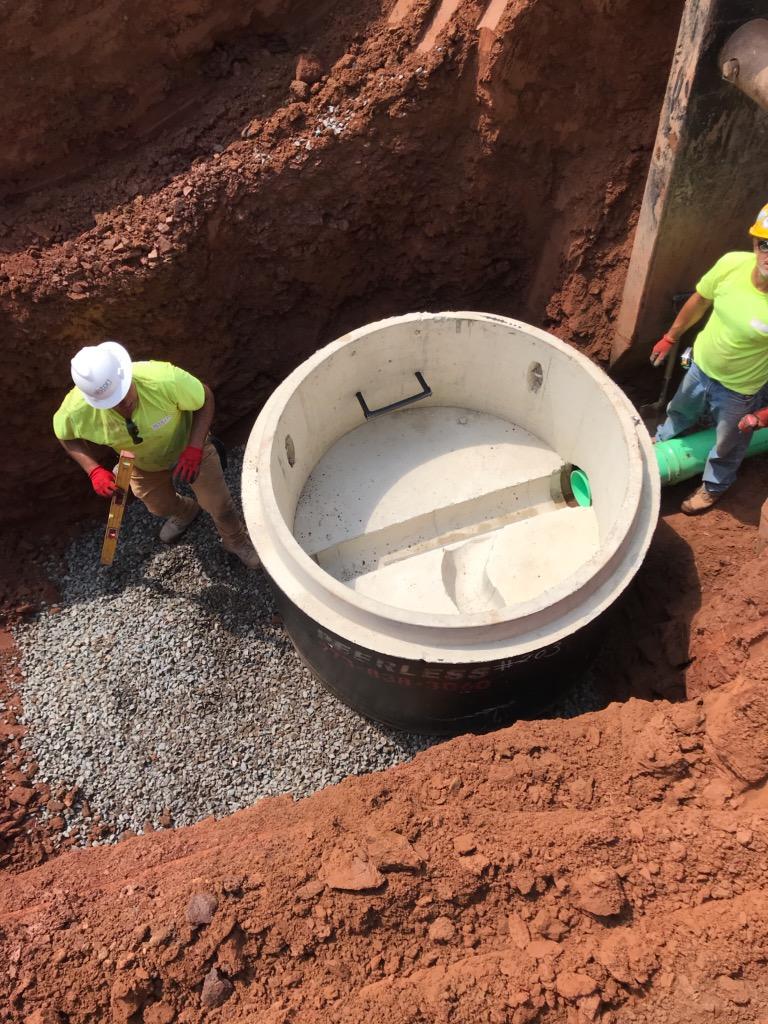
What Is a Catch Basin?
Purpose:
A catch basin collects surface water runoff and directs it into the underground stormwater system. It also filters out debris like leaves, sediment, and trash before the water enters downstream pipes.
Construction Details:
Catch basins look similar to manholes on the surface but function differently. They are typically square or rectangular and include a sump at the bottom to trap debris. Water flows in through a grated opening at the top and exits through a pipe connected to the drainage system.
When to Use a Catch Basin:
- In parking lots, roadways, and curbs where surface water needs to be captured
- At low points in grading where water naturally collects
- In areas where keeping debris out of the pipes is a priority
Peerless Concrete Tip:
We manufacture durable, high-flow catch basins ideal for both residential and commercial sites. These are especially useful in New Jersey’s heavy rain seasons, where stormwater management is a key concern for developers and municipalities.
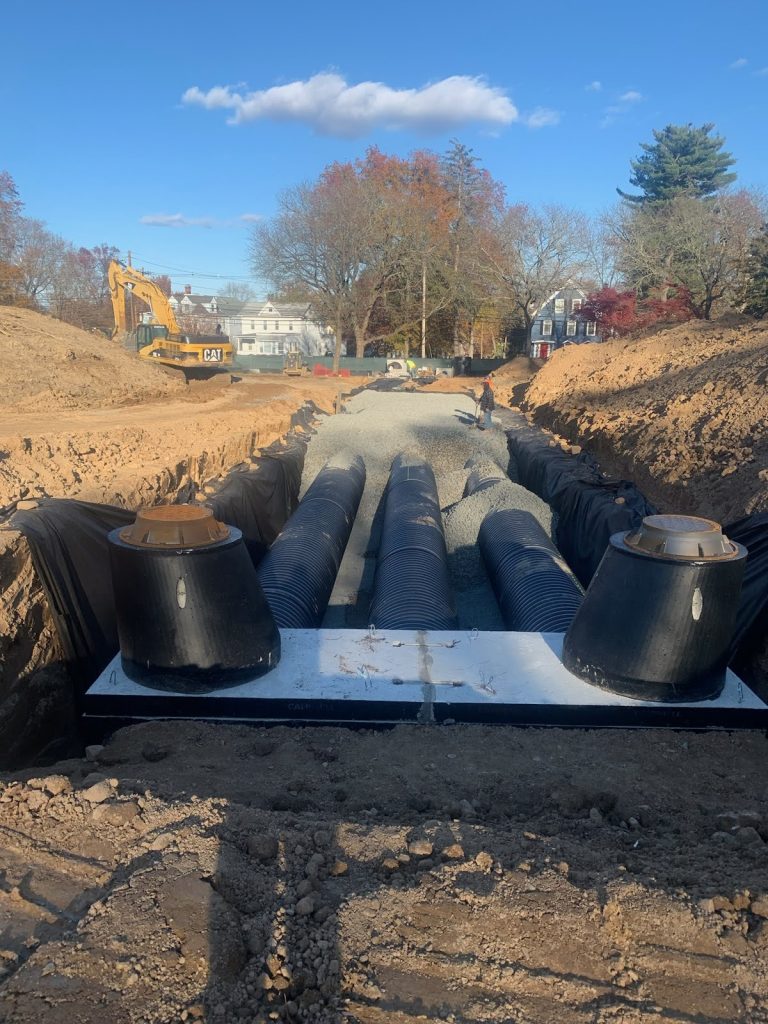
What Is an Inlet?
Purpose:
An inlet is a general term used for any opening in a drainage system that allows surface water to enter. This could include a catch basin, but more often refers to curb inlets or grated openings placed alongside roadways.
Construction Details:
Inlets can be cast into the curb line, placed in medians, or installed in combination with stormwater boxes. Their purpose is to quickly move surface runoff into the underground system. Depending on the design, inlets may or may not include a debris trap.
When to Use an Inlet:
- Along roads, curbs, and sidewalks where stormwater needs to be directed away from the surface
- In conjunction with catch basins and manholes as part of a complete drainage system
- In DOT or municipal roadway drainage projects
Peerless Concrete Tip:
We offer a range of precast inlet boxes and structures that can be paired with custom grates or hoods. If you have a specific design or DOT requirement, we can fabricate to match your plans.
How They Work Together
Most drainage and utility systems use a combination of all three:
- Inlets gather water from the surface
- Catch basins trap debris and allow water to flow into pipes
- Manholes provide access for inspection and maintenance
Together, they create a safe, effective, and maintainable system. Understanding the function of each ensures that your project is built correctly and can stand up to long-term use.
Why It Matters
Using the wrong product in the wrong place can lead to major issues — from system backups to safety hazards and costly repairs. As a contractor or project manager, having a working knowledge of each structure’s role can save time, money, and confusion.
At Peerless Concrete, we help make this easier. Our experienced team can walk you through product selection, spec requirements, and delivery scheduling. Whether you’re working on a new development in Morris County or replacing infrastructure in Bergen or Passaic, we’re here to support you with reliable precast solutions and responsive service.
Need help choosing the right precast structure for your project?
Get in touch with Peerless Concrete today. We proudly serve all of New Jersey, as well as parts of New York and Pennsylvania, with the knowledge, products, and delivery capabilities contractors trust.